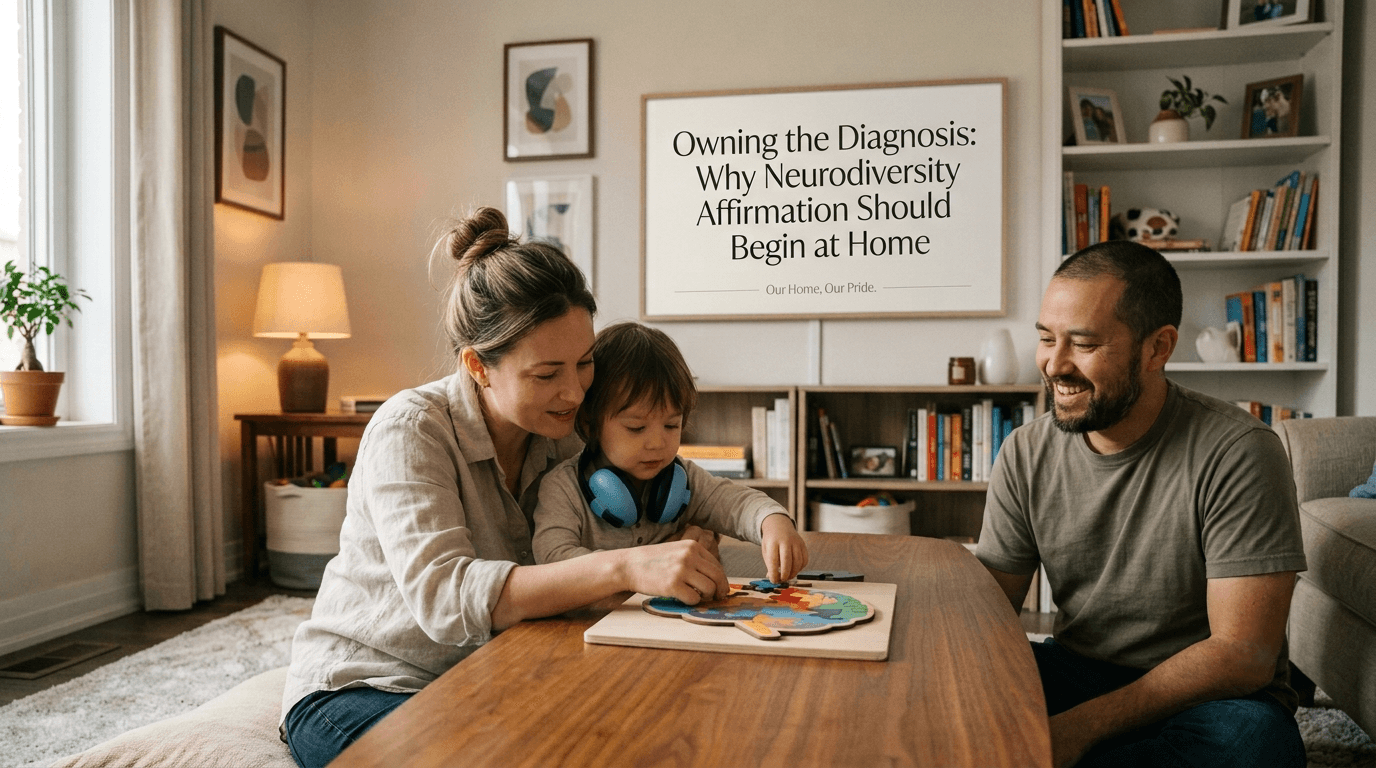
Children are like little emotional sponges. They can read our micro-expressions, feel our muscle tension, and hear the underlying anxiety in our voices. Long before a child truly understands what words like “Autism,” “ADHD,” or “Global Developmental Delay” mean, they can sense how you feel about those words and this is why neurodiversity affirmation needs to begin at home.
If a diagnosis is treated like a dark, unspeakable family secret, your child will internalize that they are something to be fixed or hidden. But if you own that diagnosis with fierce, unshakeable pride, you give your child the ultimate armor against a world that isn’t always built for them.
Moving from “Grief” to “Pride”
It is entirely normal to grieve the future you originally envisioned when you first received your child’s diagnosis. Allow yourself to feel that. But don’t unpack your bags and live in that grief. Making the best of a diagnosis means shifting your focus from what your child cannot do to who your child uniquely is.
Being proud of your child doesn’t mean ignoring their challenges. It means recognizing that their brains work beautifully differently. Their milestones might look different, but my goodness, they are worth celebrating even louder.
Visual Reminders for the Whole Family
One of my favorite ways to jumpstart this mindset shift of neurodiversity affirmation at home or in the classroom is by making neurodiversity visible, colorful, and completely normalized. From a behavioral standpoint, physical environment cues are incredibly powerful tools for reshaping our daily internal habits.
Whether it is a colorful print on the wall, an infinity loop symbol on a water bottle, or an affirming quote on a therapy folder, these daily visual prompts do something subtle but profound:
- It serves as a constant anchor for you to stay grounded in pride rather than falling back into worry.
- It signals to educators, therapists, and strangers that you are not a parent looking for pity—you are a parent celebrating an exceptional kid.
- It teaches your child, as they grow older, to see their identity plastered in bright, joyful colors rather than clinical medical files.
(I actually couldn’t find visual resources that felt bright and celebratory enough for my own clients and students, so I ended up designing a small line of neurodiversity-affirming stickers myself. You can use absolutely any visual cue that resonates with your family.)
Own the Room
The next time you walk into a therapy center, a playground, or a family gathering, hold your head high. You don’t have a broken child; you have a child with a differently wired brain who is working twice as hard as everyone else just to navigate the day. They deserve a parent who stands beside them, completely unapologetic and deeply proud after having gone through the journey of neurodiversity affirmation.
Let’s Connect!
How do you celebrate neurodiversity and unique milestones in your home? Do you use any visual reminders or daily habits to keep your family grounded in pride? I’d love to hear your stories—leave a comment below and let’s inspire one another!
P.S. If you want to take a look at the custom neurodiversity stickers I created for families and classrooms, you can browse the collection in my Etsy shop.
Leave a Reply