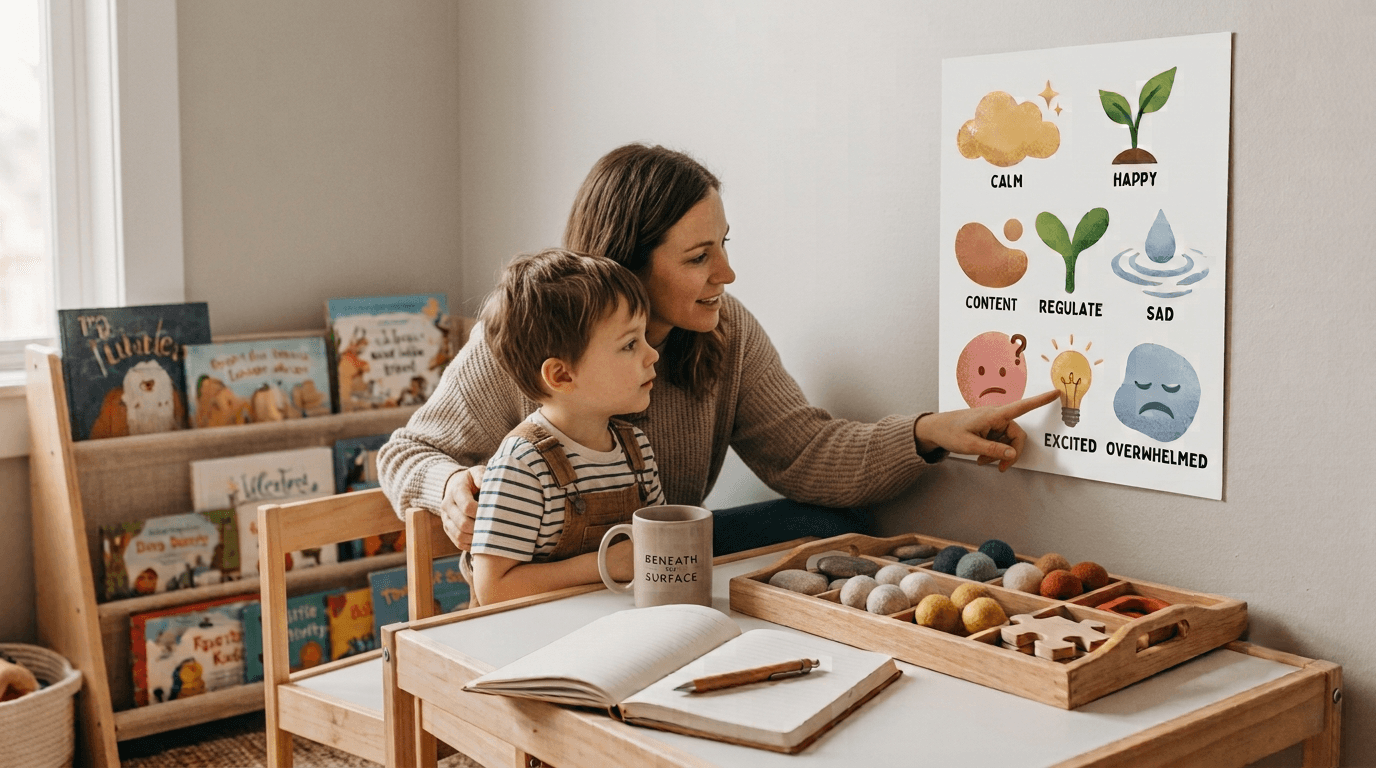
Now that we’ve established why animal feelings posters are brilliant therapeutic tools, let’s talk about implementation where it matters; from the meltdowns to the everyday moments. In my 13 years as an EIPIC teacher and behaviorist, I have learned that even the most beautiful resource is useless if it just sits on a wall gathering dust.
Having both a cat and a dog version opens up fantastic double-powered behavioral strategies. Here are three concrete, behaviorist-backed ways to integrate these posters into your daily routines:
Strategy 1: The “Low-Demand” Morning Check-In
For many neurodivergent kids, transitioning into the classroom or starting the morning routine at home is a high-anxiety period. Verbalizing “How are you feeling today?” can feel like a massive demand.
- How to do it: Mount your cat and dog posters side-by-side at your child’s eye level. Keep a small clothespin, magnet, or a velcro arrow nearby.
- The Prompt: Instead of asking for words, say, “Are you feeling more like a cat or a dog today? Show me your morning animal.”
- The Behavioral Benefit: This gives the child autonomy. If they point to the Nervous cat or the Bored dog, you instantly have data on how to prime them for the day ahead without forcing a draining verbal conversation.
Strategy 2: Gestural Prompting During Sensory Overload
When children are in the middle of autistic meltdowns or an ADHD emotional hijack, the language center of their brain effectively shuts down. Asking them to “use their words” is biologically impossible at that moment.
- How to do it: Keep smaller, laminated print-outs of both charts in your designated “Calm Down Corner” or sensory space.
- The Prompt: When the child has de-escalated slightly but is still non-verbal, point to the poster of their preferred animal. Point to the Happy animal and shake your head, then point to the Overwhelmed or Mad animal. Hand them the chart. By giving them a non-verbal, animal-mediated medium to express their state, you reduce the cognitive load, accelerating their return to a baseline state of calm.
Strategy 3: The “Cat vs. Dog” Perspective-Taking Game (Proactive Skill Building)
We cannot teach emotional regulation skills when a child is already upset or going through meltdowns; we must teach them when they are calm and receptive. Having two different animal posters is perfect for teaching perspective-taking (Theory of Mind).
- How to do it: Sit with the child when they are regulated. Use both posters to create scenarios.
- The Game: “Look at this Dog poster. This dog is Excited because he is barking loudly! Now let’s look at the Cat poster. How does the cat feel when the dog is barking? Oh, look, the cat is Frightened or Agitated.”
- This builds empathy and social awareness by using the animals as neutral characters, helping them understand how their own high-energy behaviors might impact the “internal state” of peers or siblings.
Final Thoughts from the Classroom
Behavior is communication. When children exhibit challenging behaviors, they are usually screaming, “I don’t have the words or the tools to tell you what’s happening inside me!”
Tools like these printable animal posters don’t just teach the ABCs—they give our children a safe, engaging, and neurodivergent-affirming lexicon for their feelings. Whether you are an early intervention teacher looking to level up your classroom decor or a parent trying to find peace during the afternoon transition, utilizing our furry friends is the perfect place to start.
Leave a Reply