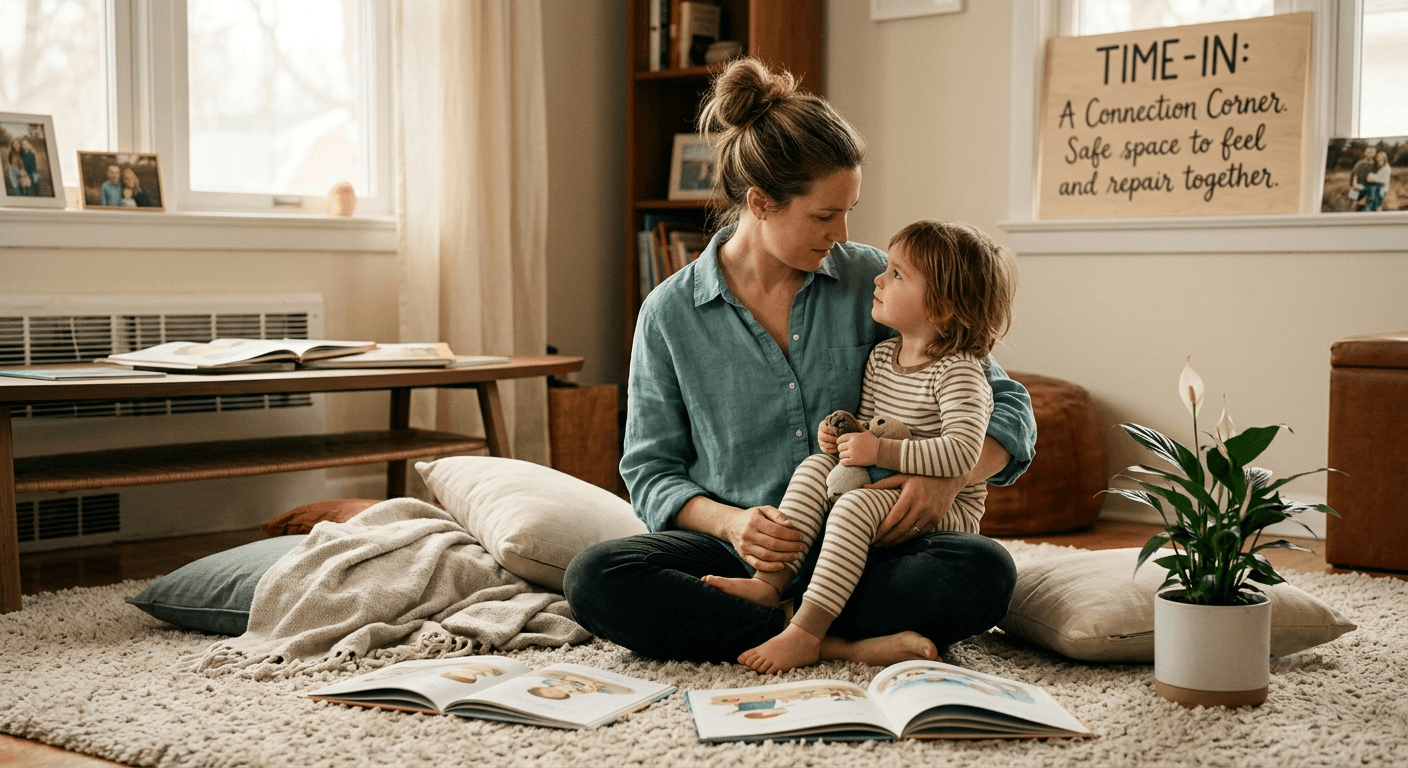
As an Early Intervention Programme for Infants & Children (EIPIC) teacher and behaviorist for the past 13 years, I have seen my fair share of floor-shaking meltdowns when a calm down corner is absent. I’ve seen them in my classroom. I’ve seen them during home visits. Let’s be honest, we’ve all witnessed them in the middle of a crowded place on a Sunday afternoon.
When a child hits that point of absolute emotional overload, our instinct as parents is often to stop the behavior immediately. We might shout, issue a threat, or sentence them to a traditional “time-out” in their room.
But here is a truth I’ve learned from over a decade in the field: A dysregulated child cannot access logic.
When your child is screaming, throwing things, or sobbing uncontrollably, the thinking part of their brain has completely gone offline. They aren’t trying to give you a hard time because they are having a hard time. Sending them away to isolate in a dark corner doesn’t teach them how to calm down. It just teaches them that their big emotions are too scary for you to handle.
If we want our children to learn true self-regulation, we need to move away from “time-outs” and move toward a “Time-In.” And the most effective way to do that at home is by creating a dedicated Calm Down Corner.
What is a Calm Down Corner (and What It Isn’t)?
A calm down corner is not a place of punishment. It is a safe, predictable, and cozy sanctuary where a child can go to process big feelings like anger, frustration, or sensory overload.
Think of it as an emotional pit stop.
In some homes, space can be tight, but the beauty of a calm down corner is that it doesn’t require an entire room. It can literally be a small nook between a wardrobe and the wall, fitted with a small, comfortable rug, a beanbag, and maybe a couple of their favorite plushies.
However, just throwing a cushion in a corner isn’t enough. If you tell a hyperventilating six-year-old to “go sit on the beanbag and calm down,” they won’t know what to do. They need tools. They need a menu of choices.
Why Verbal Instructions Fail During a Meltdown
Have you ever tried to reason with a furious child? “Take a deep breath! Count to ten!” Usually, it just makes them angrier.
When the brain’s alarm system (the amygdala) is triggered, verbal processing drops significantly. Your words sound like Charlie Brown’s teacher – just background noise.
This is where visual strategies become an absolute game-changer.
Children are highly visual learners, especially when stressed. A structured visual guide placed at their eye level in their calm down space acts as an anchor. It doesn’t scream at them or judge them. It simply presents clear, concrete, non-verbal options of what they can do right now to help their bodies feel safe again.
In our next post, we deep-dive into the exact science-backed visual strategies you should include in this calm down corner, and the golden behavioral rule for introducing the space to your child so they actually use it.
Parents, what does your current cool-down routine look like at home? Have you ever tried a “time-in” or designated a specific calm space in your home before? Let’s chat in the comments below!
Leave a Reply